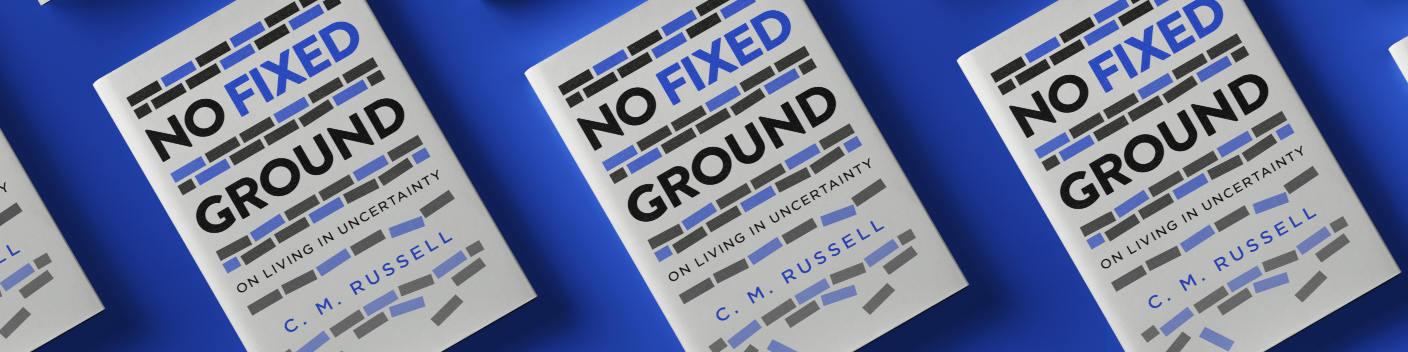
My new book No Fixed Ground: On Living in Uncertainty is released today.
It's about hope.
In the recession that followed the pandemic I lost my job. I'm self-employed, and when lockdown lifted and the economy nosedived my client list collapsed. The drought lasted for months, some of the most difficult for my family and I, but eventually the economy picked up and work began to trickle in.
When I could finally lift up my head again, I found a question lodged in my mind: why, in the middle of the hardest period of my own life, did the world outside no longer frighten me the way it used to?
Hope had sustained me through personal crisis and now changed my outlook towards social crises too. I thought differently about things that I believed I understood well. Crises in society, politics, climate, and technology, which had all felt so terminal before, I now approached with a new and unexpected outlook. I could still see the crises around me (fraying institutions, divided politics, changing climate, rising inequality, ageing populations, concentration of power), and their dangers seemed no less great, but I wasn't afraid. I felt good, but I didn't know why.
I set out trying to find out. I read science, history, psychology, philosophy, anything that might help me to understand, to give me a certainty to hold on to.
What I discovered was not certainty. I found a way of thinking that didn't even require it. I thought I needed a foundation for the hope that I felt but instead found that hope does not need one. When we accept that no foundations are absolute and all are chosen, we become free to choose our own. And that freedom, the freedom we grant to ourselves, is where hope becomes possible.
No Fixed Ground: On Living in Uncertainty is available now on Amazon US, Amazon UK